
When it comes to substances that fight acne, products like salicylic acid and retinol are often the first that come to mind. Of course, oils like tea tree, lavender, and rosemary are also said to be beneficial for acne. You can add another natural oil to your acne treatment list: safflower oil.

What is safflower oil?
Produced from the safflower plant, known for its bright yellow and orange flowers, this oil is also used topically in some skincare and cosmetic products due to its moisturizing effects. The oil promises to give your skin a smoother appearance and a softer feel.
Benefits of safflower oil for the skin
Possesses antioxidant properties: The benefits of safflower oil begin with its antioxidant properties, thanks to the vitamin E it contains and many other components. In addition, some studies have found that it helps prevent damage caused by exposure to UVB rays. (*) Furthermore, this oil has anti-aging properties by minimizing the effects of an enzyme that breaks down collagen.
Moisturizes the skin: Containing a combination of Omega 3, 6, and 9 fatty acids, safflower oil offers moisturizing and soothing properties. In addition to all its unique healing benefits, safflower oil can generally make your skin feel better.
It is antimicrobial: Some studies suggest that these properties, along with safflower oil's wound-healing effects, may be helpful in treating skin injuries. (*)
Beneficial for acne: When all the benefits listed above are combined, safflower oil has been found to be beneficial in combating acne. Its antibacterial effects help prevent acne from forming, while its anti-inflammatory properties can help suppress or reduce skin redness. Of course, it can also be beneficial for other skin problems like blackheads and whiteheads.
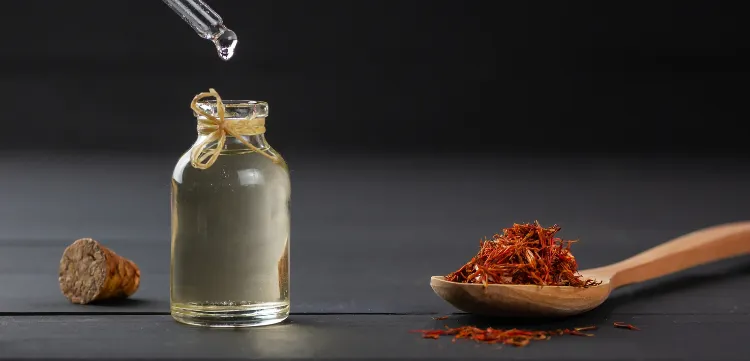
How is safflower oil used?
It is recommended that these types of essential oils be diluted with a carrier oil before use. If you are wondering what carrier oils are, olive oil, avocado oil, aloe vera oil, coconut oil, almond oil, and jojoba oil are all examples of carrier oils. You can make your own choice according to your different needs. For extra moisture, you can opt for coconut or almond oil. If you have oily skin, you can use jojoba and grapeseed oil.
While applying oil directly to acne isn't highly recommended, safflower oil is said to be non-comedogenic, meaning it won't clog pores and, with regular use, may even help cleanse them.
Recipe for a face mask for acne.
- Combine safflower oil with oatmeal and honey.
- Apply the mixture to your entire face or only to the areas where you have acne.
- Rinse with water after 10 minutes.
Important Note: You can determine your sensitivity to safflower oil by testing it on your skin before use. This is called a patch test. Apply a small amount of oil to the inside of your arm and wait 24 hours to see if there is any adverse reaction. If you experience redness, irritation, itching, or tingling, do not use it. You can also consult a dermatologist about its suitability for your skin.